

Africa holds the world’s second-largest tropical forest with valuable bioingredients at scale required for critical food, beverage and healthcare supply chains and widely seen as one of the largest untapped sources of nature-based carbon supply, yet it has captured only a small share of natural capital funding to date. That is changing as host governments build the institutional carbon markets infrastructure that compliance markets require: Article 6 frameworks, national registries and authorisation procedures. For transition investors, and for the sovereign and development finance institutions that increasingly invest alongside them, the question is less whether African natural capital can be monetised than where the regulatory infrastructure is mature enough to underwrite it.
Natural capital deals that work are built on a dislocation and the events that drive demand. When Russian and Belarusian timber lost FSC certification in 2022, certified supply elsewhere repriced overnight. When Cyclone Enawo flattened Madagascar’s vanilla crop in 2017, prices climbed to around $600 a kilogram and buyers paid for whatever origin could deliver. As the EU’s deforestation regulation makes traceability a condition of market access from December 2026, traceable cocoa and coffee are already commanding a premium that themed “sustainability” funds never captured. In each case the return came from an event, not a narrative. Amaly Legacy (“Amaly”) is developing a 600,000-hectare forest carbon project with a sustainable bioingredient value chain in East Africa, with access to a further pipeline exceeding a million hectares, built on two such dislocations.
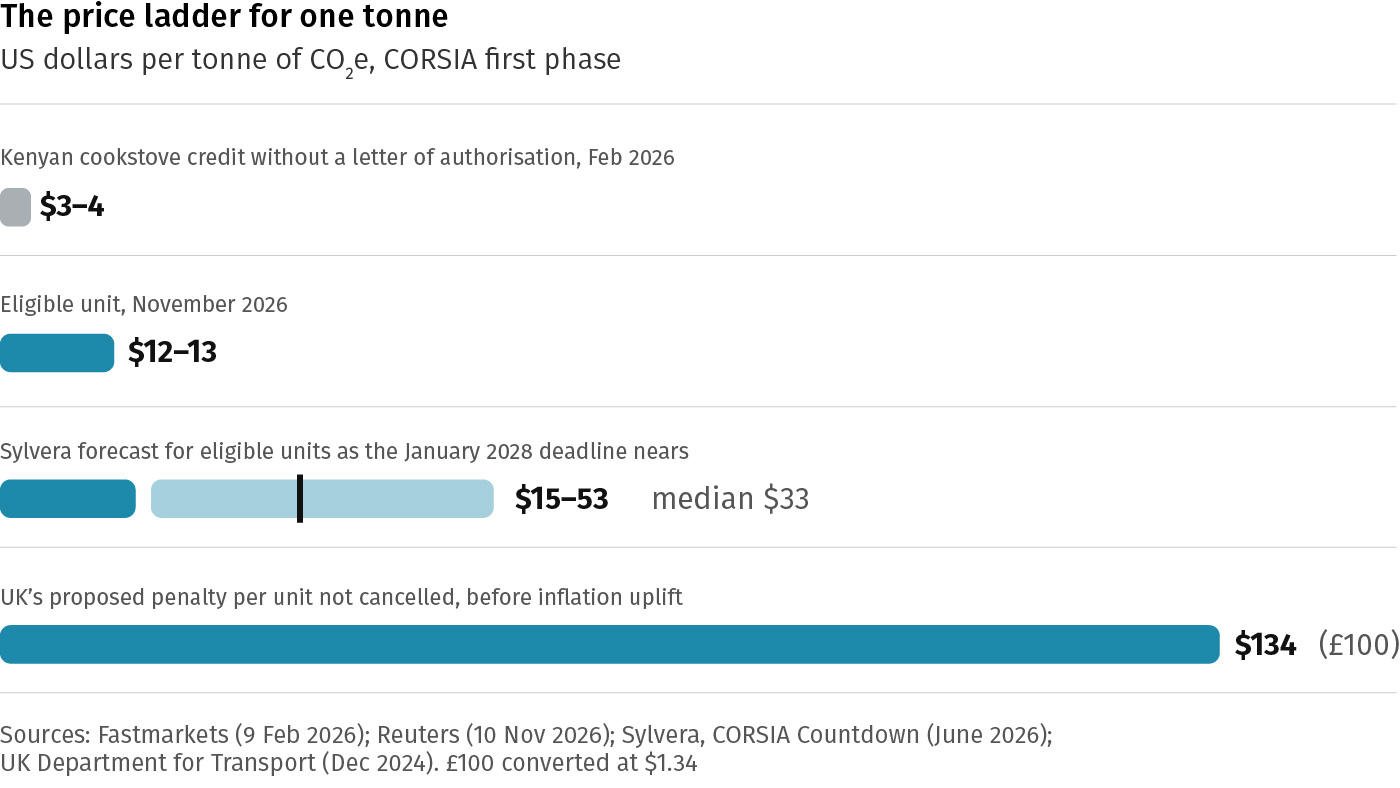
The first is regulatory – compliance carbon regimes are arriving with full force and aviation is first in line: CORSIA – the UN scheme that obliges airlines to offset growth in international flight emissions above 85% of 2019 levels with eligible carbon credits – is being written into national law by participating states, and only CORSIA-eligible carbon credits count. Demand is mandated and eligible supply is gated by regulators.
The second is idiosyncratic events – conflict and harvesting bans in a few jurisdictions have hollowed out more than 70% of the supply of a single forest-derived ingredient on which food and healthcare manufacturers depend. By an accident of nature, viable substitutes for this ingredient are prevalent across the landscapes in Amaly’s pipeline.
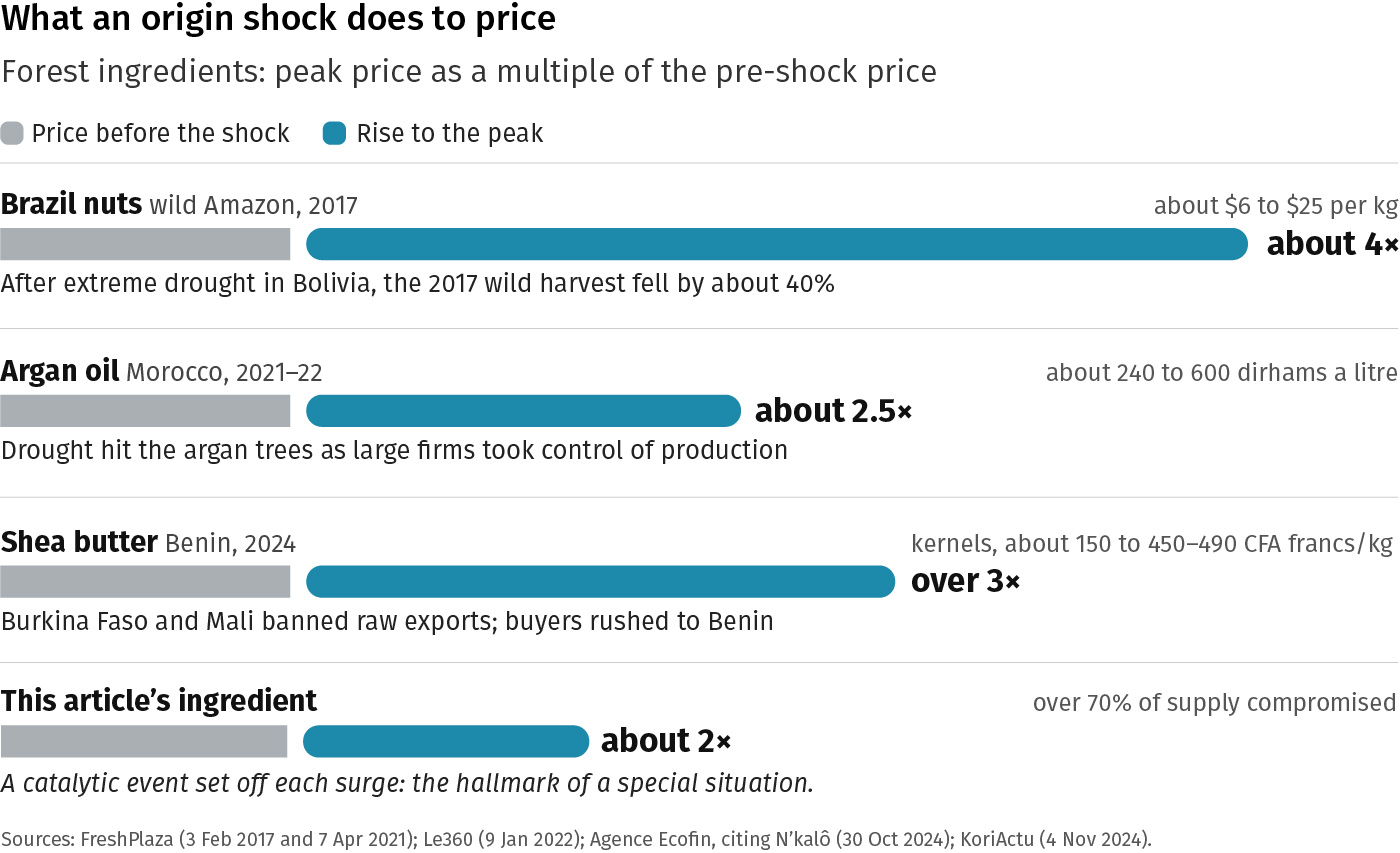
In special situations and event-driven strategies, an event – a regulatory change, a geopolitical shock, a supply-chain disruption – opens a gap between the price and value of specific assets, one that mainstream capital cannot readily close because those assets are complex, illiquid or hard to underwrite. Returns come from navigating that complexity and from the catalysts that close the gap. The classic cases are corporate events in public securities; the same logic applies to real assets, and all three elements are present here: dated catalysts, led by CORSIA’s January 2028 retirement deadline; a gap between what these assets cost to secure today and what they are worth to buyers with few workable alternatives; and a barrier – the tenure, consent and authorisation work described below – that keeps mainstream capital out.
Special Situations in Compliance Carbon Markets Intertwined with Foreign Policy
In compliance carbon markets, CORSIA is where the obligation is most immediate: airlines must retire eligible carbon credits against their 2024–2026 emissions by January 2028 or face penalties set by their home regulators, with the UK proposing £100 a tonne. That means more than 200 million eligible carbon credits to be retired by January 2028, yet as of August 2026 only about 72 million are covered by the 42 host-country letters of authorisation issued so far, leaving roughly 130 million to find in seventeen months. The scarce asset is a project that generates such credits in a jurisdiction with the authorising infrastructure, and Amaly’s project is designed precisely to supply them.
The special situations opportunity become even more attractive when we look beyond CORSIA, specifically Article 6.2 of the Paris Agreement – a critical instrument of foreign policy in climate finance – lets two countries trade emission reductions directly. Under a bilateral agreement, a buyer government pays for mitigation achieved in a host country and counts it toward its own Nationally Determined Contribution (NDC): the climate pledge every Party is legally bound to set, report against and renew every five years, each successive one expected to be more ambitious than the last. The host applies a “corresponding adjustment”, removing those tonnes from its own national ledger so they are counted once. Demand here is sovereign and dated: Switzerland, Singapore and Japan have 2030 NDC targets they have said they will meet in part with international credits, have signed bilateral Article 6 agreements to source them, and the first transfers have already been authorised. The carbon credits generated by forests in such jurisdictions thus become an asset transacted government to government. Tanzania, for example, has moved fastest: it has issued CORSIA-eligible Article 6 letters of authorisation under its carbon trading regulations since April 2024 and signed a memorandum of understanding with Singapore in June 2026 that commits both governments to conclude a legally binding Article 6 implementation agreement. A carbon right registered under such a regime is materially stronger than a voluntary marketing claim: authorised by the host state, recorded in a national registry and recognised under the Paris Agreement.
None of this removes the risks specific to forest carbon. Host governments can and do change the terms: revenue-sharing mandates, amended authorisation procedures and delays in applying corresponding adjustments have all occurred in the region since 2023. Avoided-deforestation credits have also faced sustained scrutiny over baselines and permanence, and buyers now price integrity ratings and buffer contributions accordingly. A project’s value therefore rests on the quality of its baseline and monitoring, and on the durability of its relationship with both the host state and the communities on the land.
Beyond Carbon: Sustainable Commodities for Food Security and Resilient Healthcare
The bioingredient leg sharpens the case. Some forest-derived ingredients have no adequate substitutes: synthetic-based alternatives are inferior in grade and quality and, in some markets, not authorised for use. Food and beverage makers have relied on them for decades for stability, texture and shelf life; medical-device makers depend on them where biocompatibility is non-negotiable. Supply is concentrated in a handful of origins now compromised by armed conflict, over-extraction and the harvesting bans that followed. For procurement teams that is a sourcing problem; for health systems a continuity-of-care problem; for the rural households that collect the harvest, a livelihood.
A region Amaly is exploring, outside its current project territories, holds mature, wild-standing populations of a substitute species; there, the estimated annual harvest potential is more than ten times the current output. The ingredient is tapped from living trees, never felled, so it earns recurring, high-value income while the canopy stays standing: the commodity revenue complements the carbon income rather than competing with it while contributing to food security and resilient healthcare systems most sovereign-linked funders are increasingly mandated to address.
From Special Situations to Transition Investments
The special situation is what creates the entry point for an investor: the price-value gap is widest while eligible supply trails mandated demand, and it narrows as authorisations scale and supply chains rebuild. What remains once the gap has closed is a transition investment. Transition Investment Lab (“TIL”), defines transition investment as the pursuit of socio-economic impact alongside financial return; the opening article of this report by Bortolotti and Gifford sharpened the test to an impact delta, the improvement each dollar delivers against a baseline. By that test, what sets this programme apart is the return communities earn.
Roughly 70% of the programme’s carbon-credit gross income, about 80% of net, goes to communities, NGOs and local stakeholders in regions home to hundreds of thousands of people, routed through their own committees. That is a wealth shift for the communities while delivering commercial investor returns; most of the value the forest creates simply stays with the people who keep it standing. Amaly’s model therefore operates at the intersection of natural capital special situations investing and transition investing, aiming to demonstrate the two are not mutually exclusive.
Tenure and Consent: From Binding Constraint to Moat
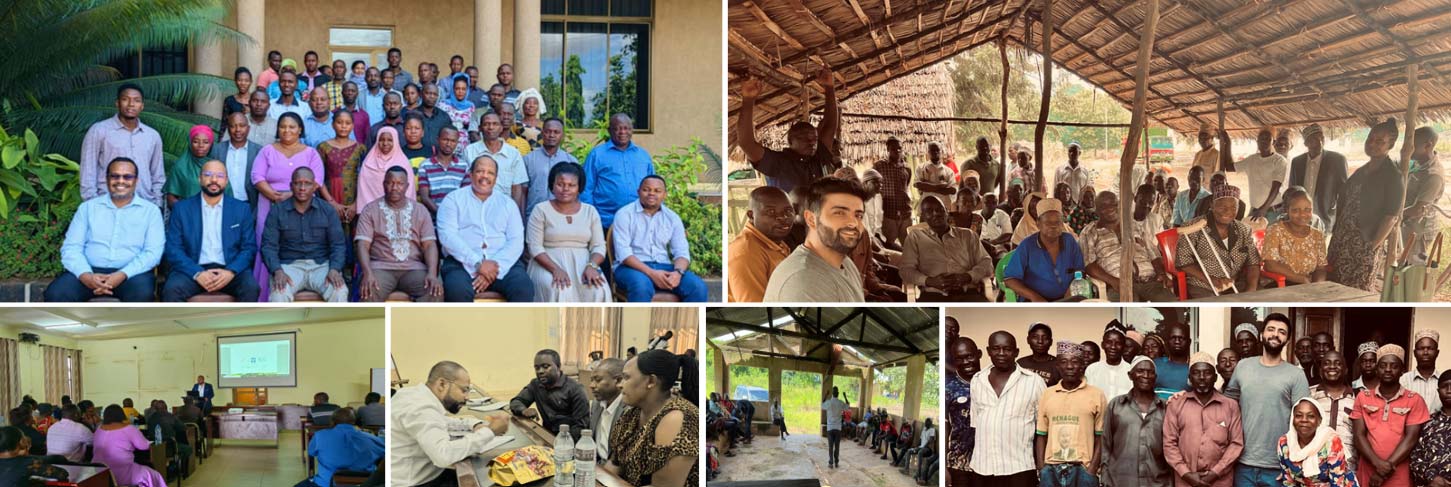
In special situations, the barrier that keeps mainstream capital out is also the moat that lets a specialist realise the price-value gap; here that barrier is tenure and trust. A carbon right is only as good as the land tenure beneath it, so due diligence comes first: who holds the forest, under what law, with which overlapping claims. From there a serious operator moves in stages, each earning the next: community engagement; documented free, prior and informed consent; a memorandum of understanding with land stewards; and binding carbon rights agreements with them. As the project matures, addendums extend the terms in line with best practice. That journey makes the right durable, and it is why the price-value gap persists: mainstream capital cannot underwrite tenure at scale, so the opportunity accrues to operators who can. Much of the work runs through local non-profit partners, which is why Amaly places them at the heart of its model and has built a traceability and fundraising platform, used by non-profits, foundations and retailers, through which a donor or buyer can trace a tonne of product back to a village.
Implications for Transition Investors
Allocators have heard the natural-capital pitch before, usually dressed as a theme or as philanthropy. Airlines need roughly 130 million host-authorised credits before January 2028 and cannot conjure them; buyer governments want Article 6.2 outcomes that count toward their NDCs; food and medical-device makers are losing an ingredient they cannot replace. East Africa’s forests can answer all three, with two revenue streams driven by different markets. The novelty is where the money goes: most of the carbon revenue stays with the communities that keep the trees standing, while investors hold an asset with both financial and impact returns. That is transition investment in TIL’s sense: impact is no longer a cost line to be minimised; it is part of the return, and it compounds.
This is a practitioner contribution; the views expressed are the author’s own.